
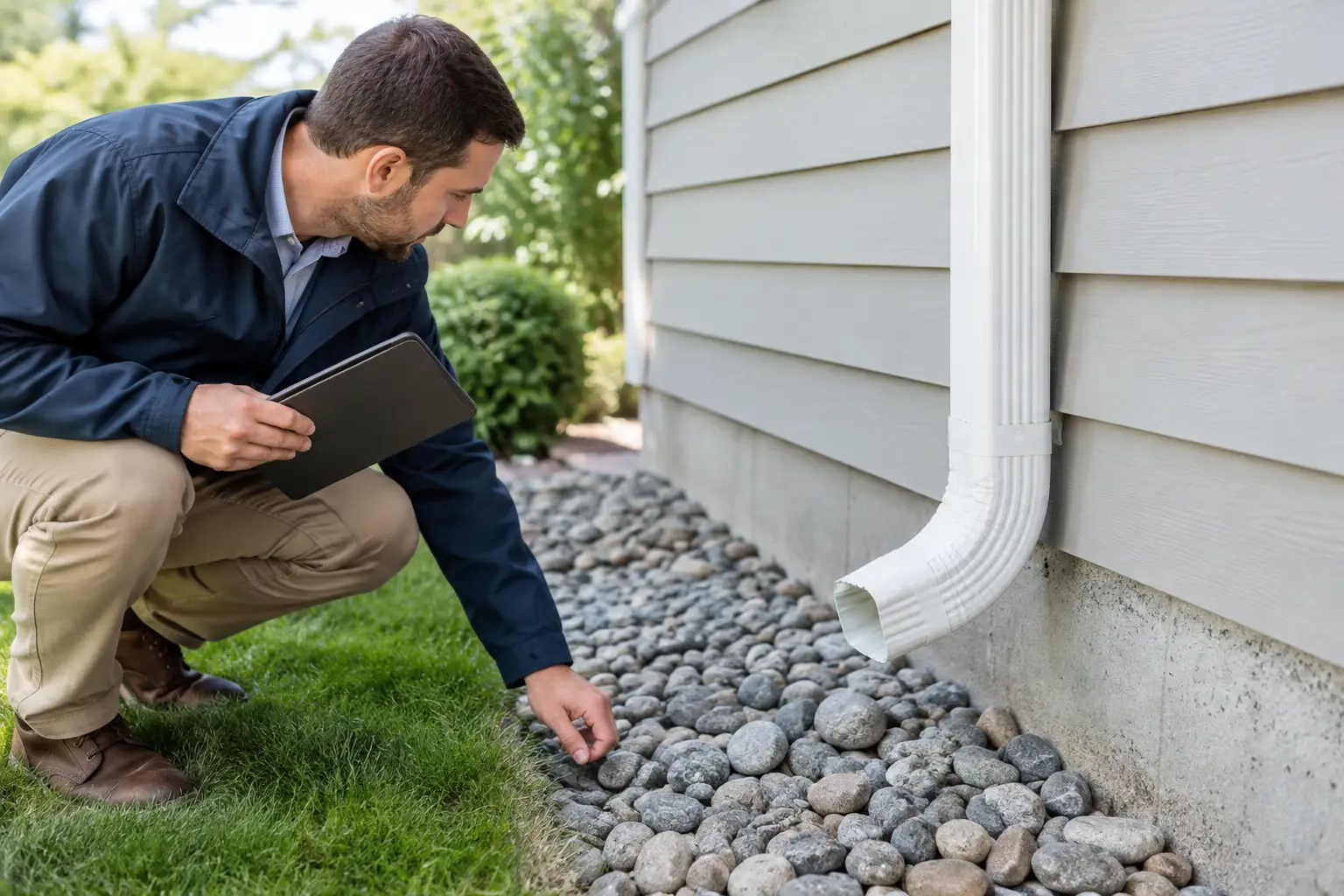
A beautifully presented home can still carry a costly water problem. Fresh mulch, new paint and a dry open home can hide poor falls, blocked stormwater pipes or a backyard that turns into a pond after heavy rain. Knowing how to inspect property drainage gives buyers a practical way to identify risk before emotion, competition or a contract deadline takes over.
For investors, drainage issues can mean vacancy risk, repeated maintenance and damage to the asset you are relying on for long-term growth. For owner-occupiers, they can affect everyday comfort, insurance claims and the confidence you feel in your new home. The aim is not to expect a perfectly dry block in every weather event. It is to establish whether water is being directed safely away from the dwelling and whether any concerns have been properly managed.
How to inspect property drainage at an inspection
Start with the broader block, not the kitchen benchtop. Stand at the front boundary and assess the site’s position relative to neighbouring properties and the street. A home at the bottom of a slope, below road level or beside a drainage reserve deserves closer attention. These locations are not automatic deal-breakers, but they can require a more thorough review of stormwater management, overland flow and drainage infrastructure.
Walk the perimeter of the house where access allows. You are looking for the path water will take when the ground is saturated, not just what the yard looks like on a sunny Saturday. Soil and paving should generally fall away from the building. Water sitting against external walls can contribute to dampness, subfloor moisture, mould, timber deterioration and movement in reactive soils.
Pay attention to whether garden beds have been built high against brickwork or weep holes. This can trap moisture against the home and, in some cases, obstruct the intended drainage path. Similarly, a newly installed deck, patio or paving area may look like an upgrade while quietly directing runoff back towards the house.
At the roofline, inspect the visible gutters, downpipes and discharge points. Gutters overflowing in a storm may be caused by simple leaf build-up, but they may also point to inadequate capacity, poor falls or damaged connections. Downpipes should connect to a lawful drainage system or discharge in a way that moves water away from the building without creating erosion or nuisance for neighbours.
Look for these practical warning signs during your walk-around:
- Staining, mould, peeling paint or tide marks on external walls and inside lower-level rooms.
- Soft, boggy patches of lawn, standing water, algae or unusually lush growth along one part of the block.
- Cracked, sunken or uneven paving that suggests water has washed away supporting soil.
- Erosion near downpipes, retaining walls, paths, driveways or the base of a slope.
- Rusted grates, blocked pits, damaged drain covers or pipes that appear disconnected.
One sign alone does not always tell the full story. A damp corner after a week of persistent rain is different from ongoing moisture staining in the middle of a dry spell. The value comes from reading the condition of the property as a whole.
Test what you can, then ask direct questions
If the inspection allows, turn on an outdoor tap and run water into visible surface drains, such as grated pits near patios, driveways and pools. Water should flow freely rather than pooling or backing up. You will not be able to test every line at an open home, and you should never interfere with plumbing or access pits without permission, but a basic observation can reveal obvious blockages.
Open rain is even more useful. If you can arrange a second viewing during or shortly after a decent downpour, do it. Watch where roof water lands, whether driveways funnel runoff towards the garage, and whether water crosses the block from neighbouring land. For interstate buyers, a trusted local representative can inspect at different times and document conditions with photos and video.
Ask the selling agent whether the property has experienced flooding, water ingress, drainage works or insurance claims. Ask what work was completed, who completed it and whether there are invoices, warranties or approvals. An agent’s response is one input, not a substitute for independent due diligence. A vague statement that an issue was “fixed” should lead to more questions about the cause, the scope of works and whether the solution has been tested through wet seasons.
Also ask about stormwater connections, easements and any council drainage infrastructure that crosses the land. In established suburbs, pipes may run through rear yards or along side boundaries. In newer estates, retaining walls, small lots and extensive hard surfaces can make the design of drainage especially important.
Separate stormwater from sewer and flood risk
Buyers often use the word “drainage” to cover several different issues. They are related, but they should be assessed separately.
Stormwater is rainwater from roofs, driveways and yards. The question is whether it is captured and directed appropriately. Sewerage relates to wastewater pipes and fixtures. Slow drains, smells, gurgling toilets or unusually green patches can point to a sewer issue and may justify a specialist plumbing inspection with a CCTV camera.
Flood risk is broader again. A property can have tidy gutters and still be exposed to riverine flooding, creek flooding, overland flow or local ponding. Review the relevant council mapping and property disclosures where available, particularly in parts of Queensland and Victoria where intense rainfall and local topography can materially affect risk. Insurance availability and premiums should also be checked before you commit, not after settlement.
Look closely at the home’s vulnerable areas
Inside, focus on rooms adjoining external walls, bathrooms, laundries, garages and any lower-level living spaces. A musty smell, bubbling paint, warped skirting boards, swollen cabinetry or mould around corners may indicate moisture. These symptoms can come from plumbing leaks, condensation or poor ventilation as well as external drainage, which is why a professional assessment matters.
Garages deserve attention because their floors are often close to driveway level. Look at the threshold, the direction of the driveway fall and whether there is a functional channel drain in front of the door. If water can run under the garage door, stored belongings and internal access areas may be vulnerable in a storm.
For homes with subfloors, check whether ventilation openings are clear and whether there is evidence of persistent moisture beneath the structure. For homes with retaining walls, inspect for cracking, leaning, blocked agricultural drains and water staining. Retaining walls manage soil as well as water, so a failure can be more significant than a cosmetic landscaping concern.
Pools, sheds and granny flats can alter how the whole site drains. Added structures and paving reduce permeable ground, concentrating runoff elsewhere. Do not assume a landscaped backyard has been designed with water management in mind simply because it looks polished.
Know when to bring in a specialist
A standard building and pest inspection is an essential part of most purchases, but its scope has limits. It may identify visible dampness, drainage concerns and evidence of water damage, yet it cannot always confirm the condition of underground pipes or predict performance in an extreme weather event.
If concerns emerge, consider targeted advice from a licensed plumber, drainage contractor, building consultant or engineer, depending on the issue. A CCTV inspection can assess hidden stormwater or sewer lines. An engineer may be appropriate where significant retaining walls, slope instability or recurring overland flow are involved. This extra diligence has a cost, but it can be modest compared with excavation, regrading, waterproofing or rectifying water damage after settlement.
The decision should be proportionate. A small puddle beside an ageing garden tap may need a simple maintenance allowance. Repeated internal water marks, a low-lying block with no apparent drainage path, or a property where the seller cannot explain prior works deserves deeper investigation and may affect your offer price or contract conditions.
At Property Visionaries, drainage is assessed as part of the bigger acquisition decision: the block, the building, local conditions, likely holding costs and the property’s fit with your goals. A high-growth location does not remove the need for disciplined due diligence. The right property is one that supports both your financial progress and your confidence as an owner.
Before you make an offer, give water the same attention you give bedrooms, renovation potential and comparable sales. A clear view of how a property handles rain can protect your budget, strengthen your negotiating position and help you buy with far fewer unwelcome surprises.